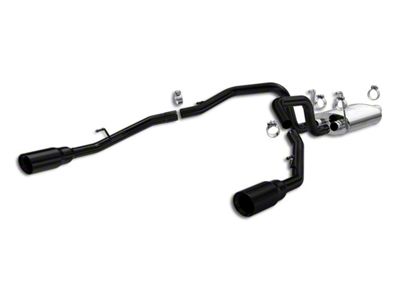
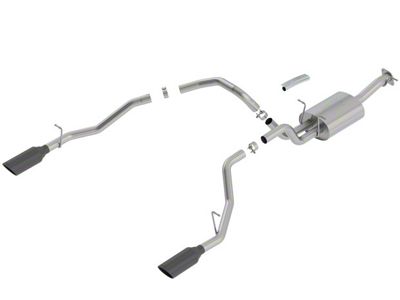
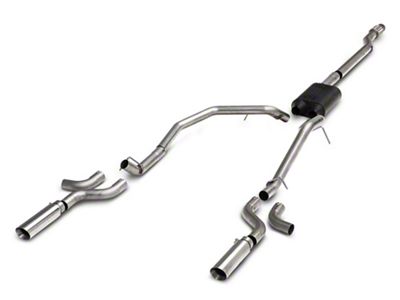
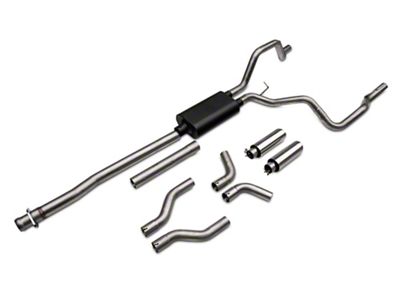
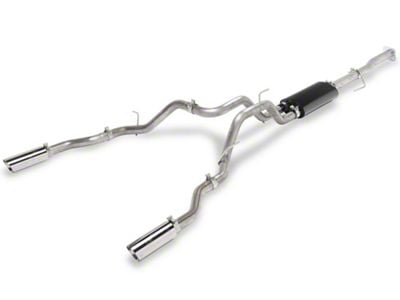
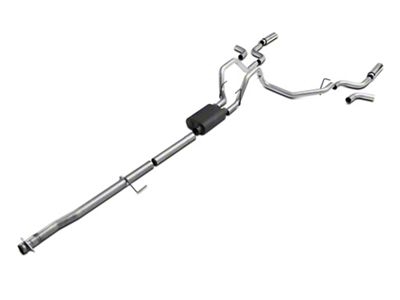
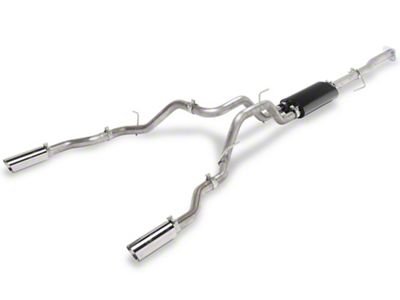
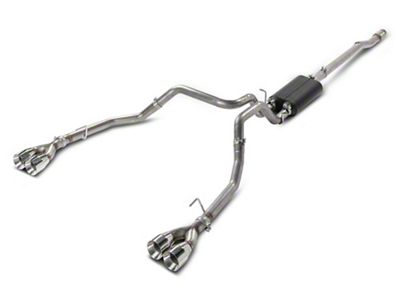
Exhaust Systems Research Guide

Frequently Asked Questions

  1. How much horsepower and torque can I expect to gain?
  2. How can I get the most horsepower and torque gains?
  3. Will I get better gas mileage?
  4. Will a performance exhaust system void my factory warranty?
  5. Will my performance exhaust system be street legal?
  6. What exactly does "street legal" mean?
  7. Will the largest possible pipe size give me better performance?
  8. What is the difference between stainless steel and aluminized steel?
  9. Do I need to run tailpipes after the mufflers?
  10. What is CARB and why is it important to have a CARB EO# stamped on my performance headers?
  11. What is a true dual exhaust and how is it different from a dual exiting exhaust?
  12. Will I get better performance from a dual exiting exhaust rather than a singe exiting exhaust?
  13. How will I know if my new exhaust system will be a true dual exhaust or a dual exiting exhaust system?
  14. How difficult is it to install a performance exhaust system?
  15. Can I work on my exhaust system while it is still hot?
  16. What if I've read through all the information, but I'm not sure which performance exhaust system is right for my vehicle?
  17. Can I speak with someone if I have any questions?

Answers to Frequently Asked Questions

1. How much horsepower and torque can I expect to gain?

No two cars, trucks or SUVs are exactly the same, so it is impossible to give an exact number for your vehicle. However, the general rule of thumb is that a performance exhaust system will free up an extra 5 - 20% in horsepower. A Ford F-150 with a 4.6L Triton V-8 engine, for example, could see power gains of up to 46 horsepower. Plus, if you add a pair of performance headers into the equation, you can expect an additional improvement of 10 - 20 horsepower.

Return to Questions

2. How can I get the most horsepower and torque gains?

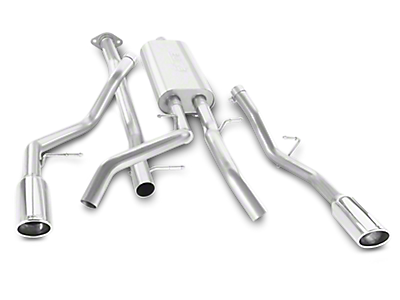
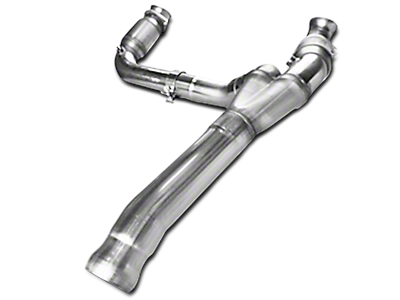
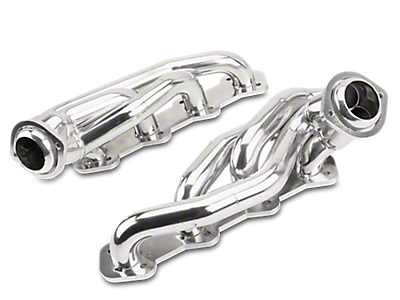
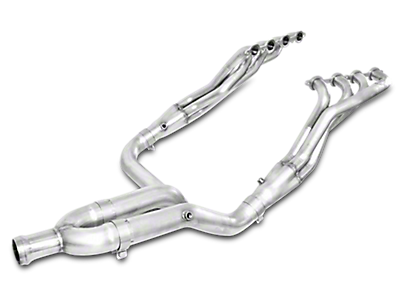
Add both a pair of Headers and Cat-back ExhaustFor the greatest horsepower and torque gains, you'll want to install both a performance exhaust system and a pair of headers. You'll almost double the power gains by upgrading the two parts at the same time. Plus, most of our manufacturers make matching pipes and headers, so you can get a complete system that's been engineered to maximize the wheel-spinning power output.

Return to Questions

3. Will I get better gas mileage?

Improve your engine's efficiencyThe best part about a performance exhaust system is that it delivers serious power boosts while also improving your engine's overall efficiency. In effect, a performance exhaust allows your motor to breathe easier, so it can work strong without having to gasp for air. Depending on your driving habits, you can expect a fuel savings of around 1 - 2%.

Return to Questions

4. Will a performance exhaust system void my factory warranty?

No. Thanks to the Magnuson-Moss Warranty Act of 1975, your auto dealer cannot deny you warranty coverage if you have installed aftermarket parts, unless it is determined that the part caused or contributed to the failure in your vehicle. So, if your water pump stops pumping while your car is under warranty, the dealer cannot refuse service because you have upgraded your exhaust system.

Return to Questions

5. Will my performance exhaust system be street legal?

Unless clearly stated otherwise, our performance exhaust systems are completely street legal. The reason is that our performance pipes are "Catback" systems, which means that they retain your factory-installed catalytic converter. Without the catalytic converter, your vehicle would not be street legal, and you would not be able to pass a smog test. It should be noted, however, that just because the product is street legal, it does not mean that your vehicle cannot still fail a smog test due to other issues (e.g. a failed oxygen sensor or a faulty gas cap).

Return to Questions

6. What exactly does "street legal" mean?

When a performance product is said to be "street legal," it means that your vehicle will still be able to pass a smog test after the part is installed. Some performance parts are designed for "off-road" uses (e.g. racecars, show cars and vintage cars), and installing them onto normal cars, trucks and SUVs will cause that automobile to fail a smog test. Fortunately, our performance exhaust systems are perfectly legal because they retain your factory-installed catalytic converter. Moreover, our performance headers are all CARB approved, so they too are completely legal and will not disqualify you from passing smog.

Return to Questions

7. Will the largest possible pipe size give me better performance?

Pipe sizesNo. When it comes to pipe size, bigger does not necessarily mean better. Stock exhaust systems often use piping that is too small, which causes restrictions and back pressure that cause you to lose horsepower. On the other hand, if you use pipes that are too large for your engine, the exhaust will not be able to scavenge properly, which will cause you to lose power and efficiency. Performance exhaust systems are sized for your exact year, make and model, so you get piping that is sized just right.

Return to Questions

8. What is the difference between stainless steel and aluminized steel?

Difference in pipe steelThe main difference between the two metal types is pricing and durability. Aluminized steel is more economical to produce than stainless steel. However, stainless steel is naturally stronger, more durable and longer lasting than aluminized steel. Because of its high concentration of chromium, stainless steel has an extreme resistance to oxidation (rust). Aluminized steel has good corrosion resistance as long as the aluminum coating remains intact. If it gets scratched or damaged, aluminized steel will begin to corrode, though still at a slower rate than factory-installed exhaust systems.

Return to Questions

9. Do I need to run tailpipes after the mufflers?

Run tailpipes after you mufflerYes! We highly recommend that you run tailpipes out from under the vehicle. Not only does this keep exhaust fumes from rolling up into your cockpit, it also minimizes the amount of sound transmitted in your car. Besides, you'll want to show off your shiny new chrome tailpipe tips.

Return to Questions

10. What is CARB and why is it important to have a CARB EO# stamped on my performance headers?

CARB is an acronym for the California Air Resource Board, which is California's regulatory agency tasked to set the state's acceptable automotive emissions levels. Most performance exhaust systems are built to meet CARB's strict requirements.

Headers usually have a CARB EO# stamped somewhere on them. They have these because when your vehicle undergoes a smog test, it must pass both a mechanical and a visual inspection. A set of performance headers bolted onto your engine block could be grounds for a failure of the visual inspection, unless you have a CARB EO# prominently displayed right on the headers. If your vehicle qualifies for off-road status, then it does not matter.

Return to Questions

11. What is a true dual exhaust and how is it different from a dual exiting exhaust?

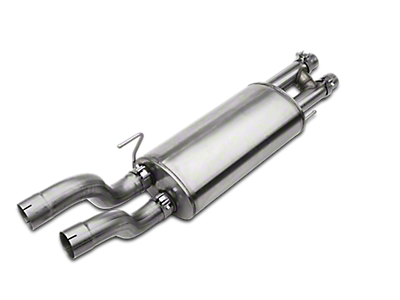
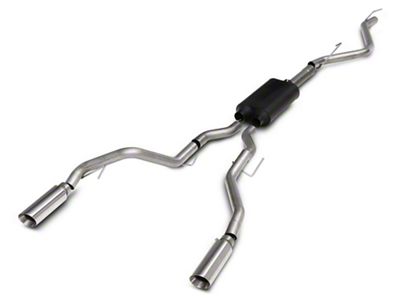
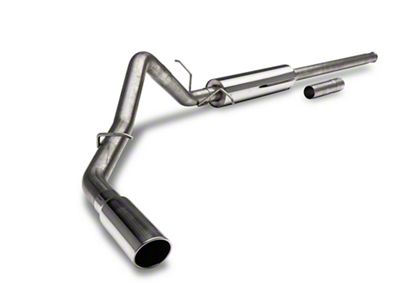
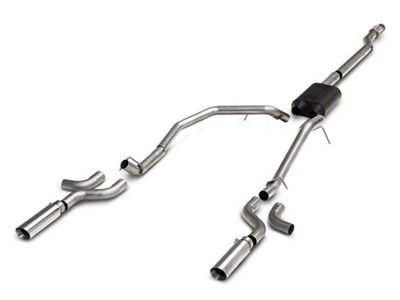
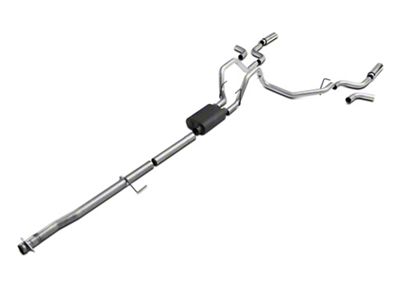
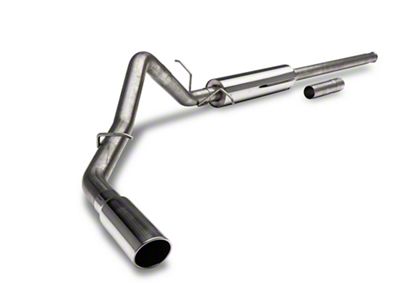
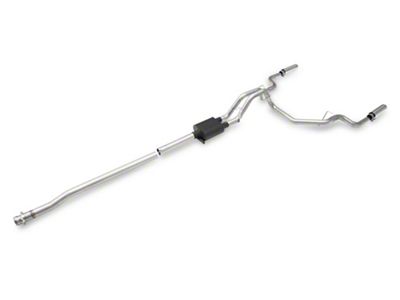
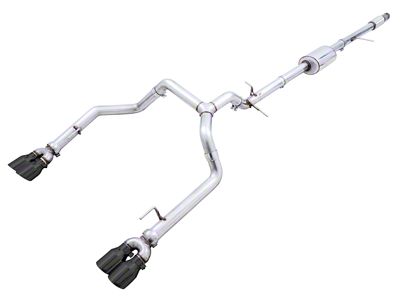
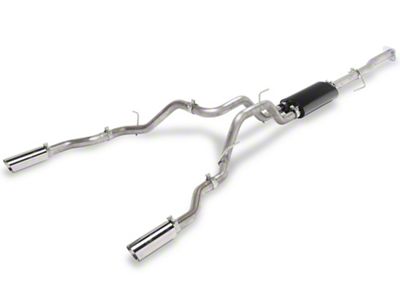
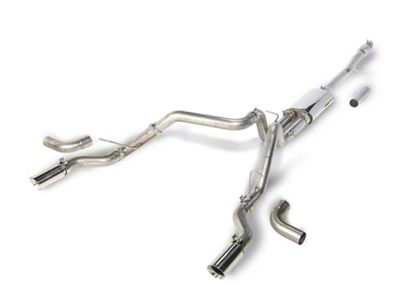
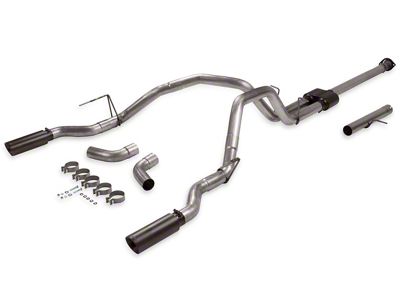
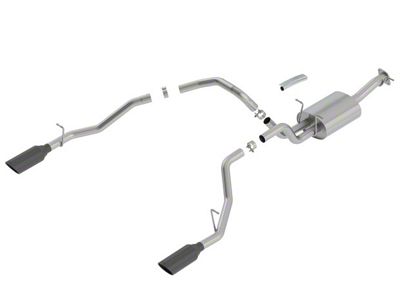
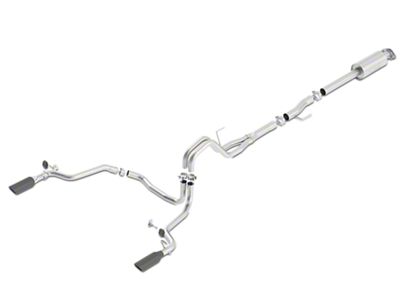
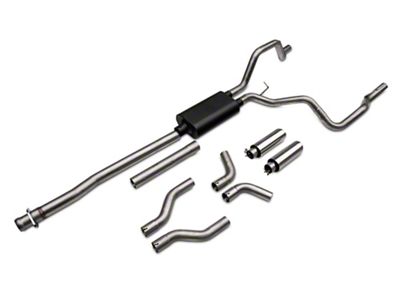
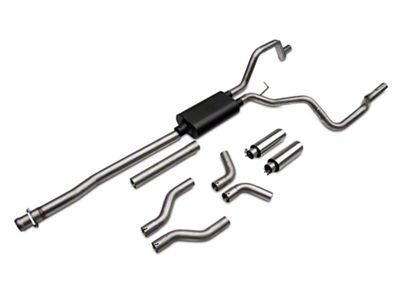
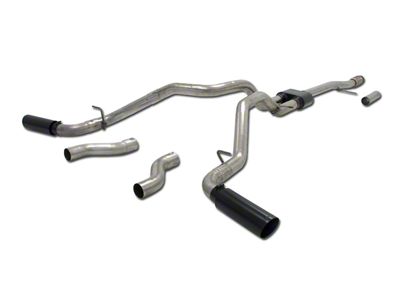
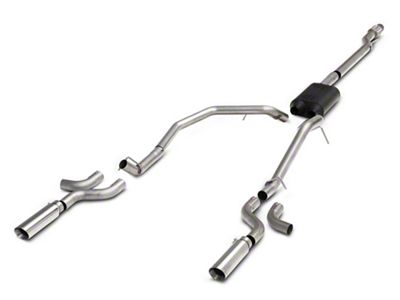
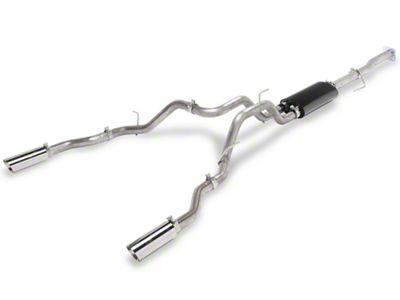
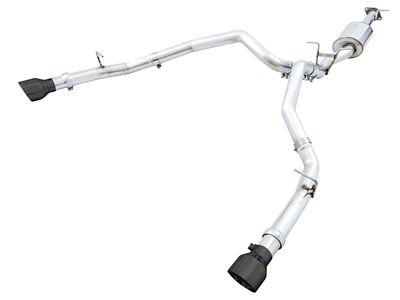
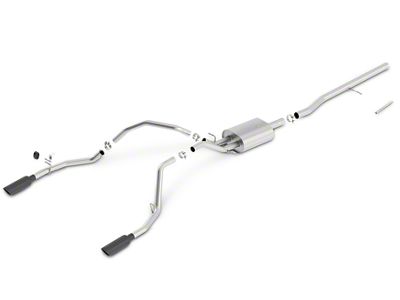
A true dual exhaust systemA true dual exhaust system has two complete sets of pipes, catalytic converters, mufflers and tailpipes running from the engine. Dual exhausts are mainly found on V-6 and V-8 motors because these engines have two exhaust manifolds-one for each side of the engine. On the other hand, a dual exiting exhaust system uses a special muffler to split the one head pipe into two tail pipes. Dual exiting systems can be installed on 4-cylinder, V-6 and V-8 engines, even if there is only one exhaust manifold.

Return to Questions

12. Will I get better performance from a dual exiting exhaust rather than a singe exiting exhaust?

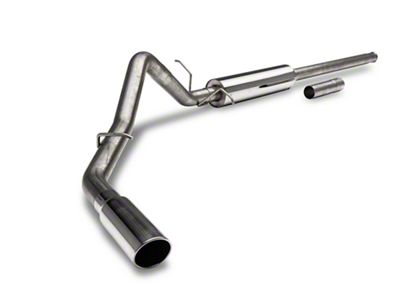
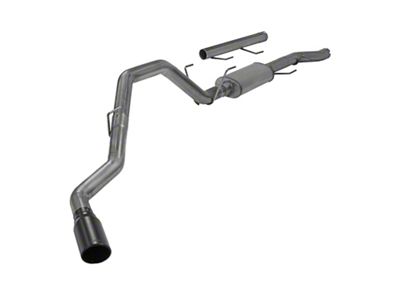
Single vs Dual exhasut pipesIf your vehicle has a stock single exhaust system (if there is only one head pipe running from your engine back to the muffler) and you install a dual exiting exhaust system, you will get the same intense boosts in horsepower and torque as with the single exiting exhaust.

The major difference between single and dual exiting exhaust systems is the number of tailpipes: the single has one tailpipe, and the dual has two. While the tailpipes augment your vehicle's style and attitude, they do not improve the performance of the exhaust.

Return to Questions

13. How will I know if my new exhaust system will be a true dual exhaust or a dual exiting exhaust system?

How do I knowOur Catback systems are designed to replace your restrictive stock exhaust. If your vehicle has a true dual exhaust to begin with (if it has two catalytic converters, two mufflers and two tailpipes), then your new performance exhaust system will also be a true dual exhaust. Likewise, if your vehicle has a stock single exhaust, then your replacement will also be a single exhaust. However, you can have a single exhaust that has two tailpipes.

The reason why a single exhaust system cannot be transformed into a true dual exhaust is because of smog regulations. In order to make your performance exhaust system street legal, exhaust manufacturers cannot tinker with your factory-installed catalytic converter. They cannot add a new converter, and they especially cannot remove one. Since switching from a single exhaust to a true dual exhaust would require adding another catalytic converter into your exhaust equation, it would make the system not street legal.

Return to Questions

14. How difficult is it to install a performance exhaust system?

Installing a performance exhaustWhile it's not as simple as changing a light bulb, replacing your factory-installed exhaust system is a straightforward operation. After your shipment arrives, you will want to make a visual inspection of the parts, ensuring that nothing is missing. Then, just follow the instructions that come with your performance exhaust system. You will probably have to cut off your original exhaust pipes, so make sure you have access to either a reciprocating saw (recommended) or a sturdy hacksaw. You'll also want to invite over a buddy or two to give you a hand positioning the new pipes.

If you are concerned about doing the work yourself, many mechanics and muffler shops will do the job for varying prices. Keep in mind, though, that all our performance exhausts are designed for driveway installations.

Return to Questions

15. Can I work on my exhaust system while it is still hot?

Absolutely not! You should never work on, or around an exhaust system until it has ample time to cool down. We recommend letting your vehicle sit for at least an hour before you start. You can use that time to review the installation process and check to see if you have all the parts. If you start working on an exhaust system after your vehicle has just been shut off, you are quite likely to receive serious burns. When in doubt, wait it out.

Return to Questions

16. What if I've read through all the information, but I'm not sure which performance exhaust system is right for my vehicle?

We are presenting you with a large dose of information, so it's understandable if you're feeling a bit dazed by it. You are in luck, though. We have a cure for information overload: give us a call. One of our knowledgeable Automotive Accessory Specialists is standing by to help you through the selection process. Our toll-free number is 800.874.8888.

Return to Questions

17. Can I speak with someone if I have any questions?

You bet! Our toll-free number is 800.874.8888. We have a troop of highly knowledgeable Automotive Accessory Specialists standing by to answer any questions you might have about performance exhaust systems, or any other part for your vehicle.

Return to Questions