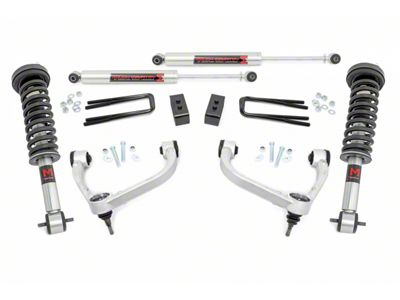
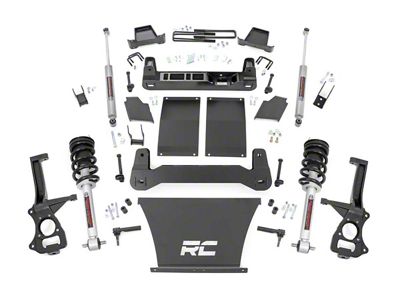
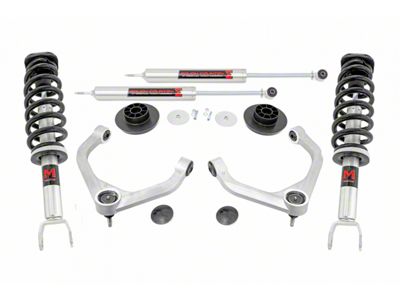
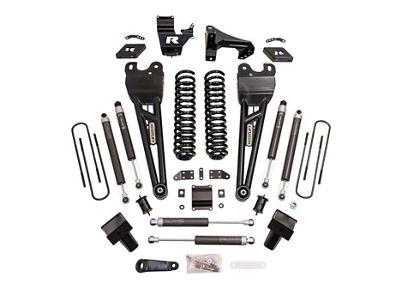
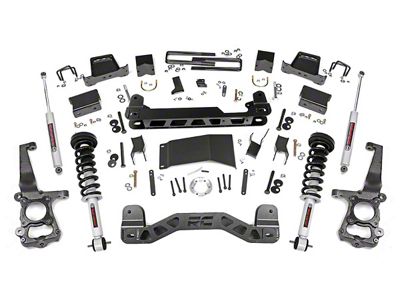
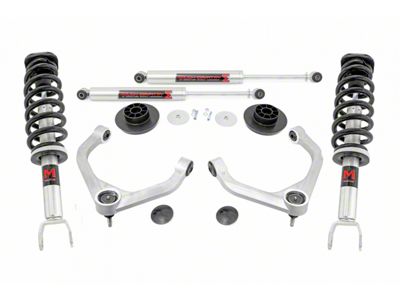
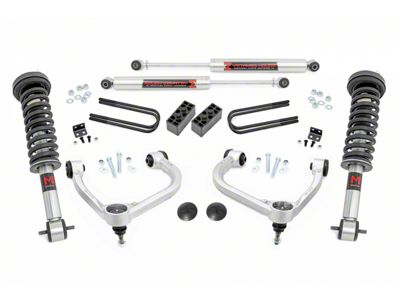
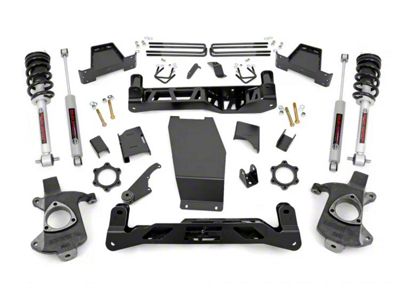
An introduction to the most misunderstood part of your vehicle: the suspension
Of course, many people are quite happy not knowing why it is that their vehicle can go over a speed bump without bottoming out. Sure, ignorance can be bliss, but knowledge is power. That's why AutoAnything is here to arm you with more suspension information than you can shake a dip stick at. First things first, we need to understand how your suspension system ties into your vehicle and how it works. Then, we'll investigate the good stuff: how to tweak and tune your suspension for improved handling, daring looks and extreme performance.
Your chassis, your suspension: an integral relationship
When we imagine an automobile, the first thing that pops into our minds is the body. After that, we probably think about the cockpit, the engine compartment and maybe even the chrome wheels. Hardly anyone would visualize a slip yoke eliminator, a pitman arm, a differential or a leaf spring. Why? The answer might be best summed up with an old cliché: out of sight, out of mind. There is a whole other dimension to our vehicles that mostly goes unnoticed because it is hidden away under a glitzy exterior. What's the name of this strange realm, you ask? It's called a chassis.
One of the toughest words to come out of France since laissez-faire, "chassis" literally means "frame," but it refers to more than just your vehicle's platform. The chassis is basically everything on your automobile from the ground up to the bottom of its body. An automotive chassis is made up of 4 components:
- Vehicle Frame: Like the DNA swimming around in our cells, the frame of any vehicle is its building block. It is the base on which every other critical part of the vehicle is anchored, including the engine, transmission, and even the body.
- Wheels and Tires: The all important link between the road and the automobile, wheels and tires make forward momentum possible. After energy and torque are created, it's up to the wheels and tires to create the traction needed to roll around.
- Steering Works: Energy without control is a recipe for disaster, especially when you're barreling down a windy mountain road at breakneck speeds. Everyone knows what a steering wheel is, but there's more to it than meets the eye. Deep down in the bowels of your chassis is an intricate weave of connecting arms and linkage that guides your wheels and keeps you in control.
- Suspension Systems: The part of your chassis that directly affects how your vehicle feels, the suspension is in charge of responding to road conditions. A suspension is the middleman between the road and you. The road dishes up rugged conditions, and your suspension transforms the bumps and dips into cloudlike smoothness (or stiff-as-a-board rigidity to suit the tastes of off-roaders).
A brief overview of the primary function of your suspension
Your suspension system basically has one very important job. It is in charge of controlling the ride of your vehicle. Now, ride means a lot of things to a lot of people. To a couple of preteens loitering around the front of their local strip mall, A ride is simply the parent who shows up to drive them home. Or, to an employee at Disneyland, a ride is the mechanical teacups that the kids love to twirl around in. However, to an auto enthusiast, ride is a vehicle's ability to create a comfortable feel while in motion. On freshly poured concrete and washboard paths alike, your suspension reacts to the situation and keeps your vehicle from rattling around like a Mexican jumping bean.
There are 2 tools that your suspension uses to smooth out your ride: springs and dampeners. Let's take a closer look at how these marvels of automotive engineering work.
Springs
Springs are your suspension system's first line of defense. As you drive over any surface, you will inevitably encounter bumps and dips. These variations in the surface of a street (or backcountry trail) send vertical energy through your wheels. Humps send your tires skyward, and holes draw them down. The spring's job is to absorb this energy and bring your wheels back to a state of equilibrium, which is when they are all at their standard height.
There are 3 basic type of springs used on modern automobiles: coil springs, leaf springs and torsion bars.
Coil Springs:
Like an industrial-grade Slinky, a coil spring is basically a heavy-duty strip of metal that has been wound around to form a spiral or helix. Coil springs are ideal for absorbing up-down energy, but their design does not deal well with side-to-side motion. As such, coils springs are typically found on all 4 wheels of most cars, and on the front suspensions of some trucks and SUVs. Eibach Pro Kit Springs are an excellent example of coil springs.
Leaf Springs:
Picture Robin Hood's trusty bow mounted to the underbelly of an automobile–that's basically what a leaf spring looks like. More specifically, a leaf spring is a stack of steel strips, called leaves. All the leaves are curved, and their arc flexes up and down when it goes over uneven paths. Leaf springs have a proven track record that spans all the way back to the medieval times, when they were used to support the axles of horse-drawn carriages and olde-time paddy wagons. Today, leaf springs are primarily used on rear-wheel drive automobiles, 4-wheel drive rigs, heavy-duty trucks, vans and SUVs. They do not deliver the same ride quality as coil springs, but leaf springs are more robust and handle weight better. A shining example of leaf springs: Skyjacker Softride Lifting Leaf Springs.
Torsion Bars:
Instead of flexing or compressing, a torsion bar absorbs energy by twisting. One end of the torsion bar is fixed firmly to a vehicle's frame, and the other side links to the vehicle's control arm. When the auto runs across a rough patch of road, the up-down energy flows into the torsion bar, which then twists. Because only the one side is mounted firm, the torsion bar will only rotate so far before it spins back in the opposite direction. Torsion bars are primarily used on front-end suspensions, and are found on all types of automobiles. Rancho Torsion Bars represent a solid set of replacement bars for vehicles with this suspension type.
Dampeners
As Newton's 3rd Law of Motion states, for every action there is an equal and opposite reaction. When a suspension spring takes in upward energy, it has to release it as a downward force. However, that downward momentum then causes the spring to bounce back upward. This back and forth resonance, or jounce to engineers, would go on for miles if not for another key suspension component: dampeners (aka shock absorbers).
Just as Penn would have a dull Vegas act without Teller, a spring would not improve your ride unless teamed up with a shock. It's the shock's job to make the energy from your springs soft and as bounce-free as possible. Imagine dropping a basketball off the roof of your house. If it falls onto concrete, it will bounce back up and dribble down the driveway. On the other hand, if it falls onto a pile of pillows or leaves, then it will just stop and wait for you. In a nutshell, that's what a shock does.
A guide to the different types of suspensions
Different vehicles are deigned and built to do different things. A sporty little roadster and a behemoth dually pickup would not roll around on the same chassis, and they certainly would not use the same suspension type. As you would expect, there are a number of suspensions rolling around all over, from the traffic nightmares of Los Angeles to the wide-open routes of the Gobi Desert.
There are 2 basic types of suspension systems: dependent and independent. Let's take a closer look at the unique characteristics of each system.
Learning about dependent suspension systems
On a dependent suspension system, the wheels on the left and right side of the vehicle are connected and work together. Generally, the dependent suspension uses a solid axle that spans across the entire width of your frame. Because both wheels are linked to this single beam, they respond to road conditions as a pair. If the camber of one wheel bends outward, then the other wheel follows suit.
On uneven terrain, dependent suspension systems function a lot like a seesaw. When one side dips into a pothole or rises over a rock, the other side goes in the opposite direction, either up or down. Needless to say, this bucking energy can be about as comfortable as riding a mechanical bull. However, with modern shock absorbers and springs, dependent suspension systems can be quite comfortable off-road and on.
Because of their ruggedness, dependent suspensions are often used on heavy-duty trucks, SUVs and rear-wheel drive cars. They also find there way onto some front-wheel drive autos. But, most new cars have some form of independent rear suspension system for greater ride comfort. Besides, most people wouldn't drive Saturn, BMW or Hyundai sedans on dirt roads except in the rare event that they find themselves in the starring role as fleeing bandit in an episode of COPS: On Location in Las Vegas.
Independent Suspension System
As the name implies, an independent suspension system does not use a single axle to connect both sides of the vehicle. Instead, the wheels on an independent suspension system react separately to road conditions. Bumps and basins on the passenger's side do not cause the driver's side wheels to rise or fall.
Independent suspension systems are rapidly becoming the standard for automobiles, and some SUVs and trucks too are using this engineering. They provide superior ride quality but are more expensive and time-consuming to manufacturer than dependent suspension systems.
The guide to lift kits
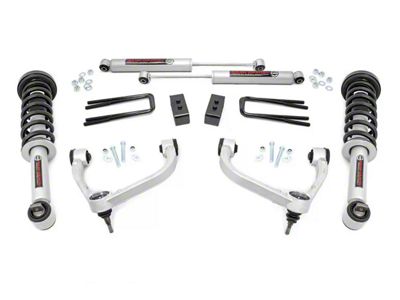
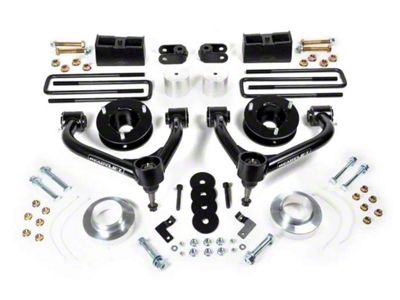
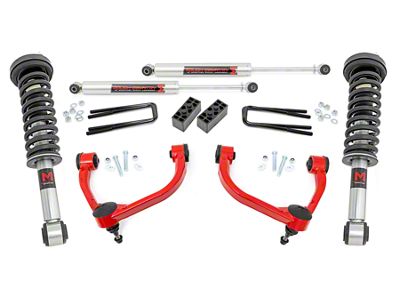
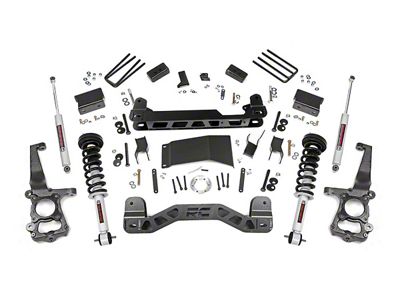
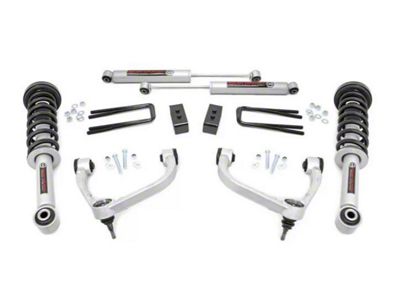
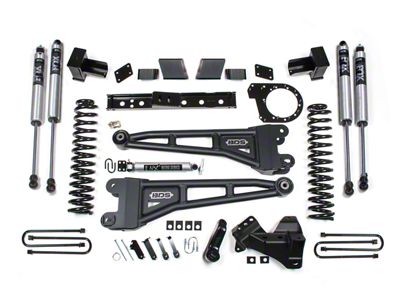
Traffic jams. Nothing makes your gas-pedal foot itch more than spending a claustrophobic afternoon in bumper to bumper gridlock. When the weekend rolls around, civilization is the last thing on your mind. You need an escape. With a lift kit, you can hightail it away from the urban jungle and stretch your rig's legs on the backcountry roads where minivans and sports compacts fear to tread.
Lift kits give you the unbridled freedom to tackle almost any terrain, but that's not all. Boosting the height of your vehicle also enhances its image. Tall trucks and giant SUVs command the respect of the road. Their towering stature adds a daring edge that stands out from the other models on the road. Part utility and part aesthetic–lift kits have something for everyone.
Your new lift kit will:
- Boost and bolster your suspension for tremendous off-roading potential
- Amplify your vehicle's daring look
- Make room for those stylish, oversized wheels and tires you've always wanted
- Level out that forward rake on heavy-duty trucks
Boost and bolster basics:
No matter how far up the evolutionary ladder humans climb, the call of the great outdoors still draws us away from the bright lights and bustle of city dwelling. Sometimes, we just need to be around dirt. Some people cop their mud fix by taking up gardening while others turn to camping. The more adventurous among us feed this primal urge by veering off the beaten path and conquering an untamed stretch of gravely, rocky, boggy terrain.
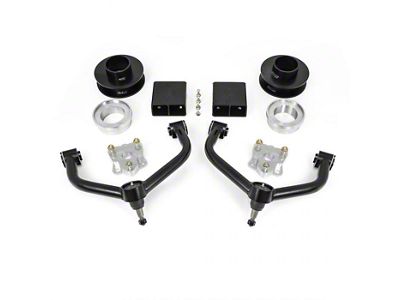
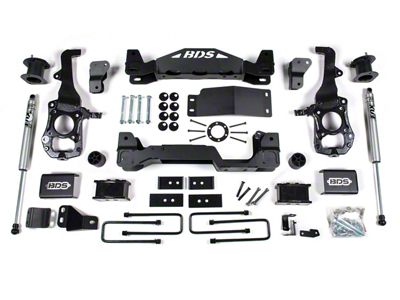
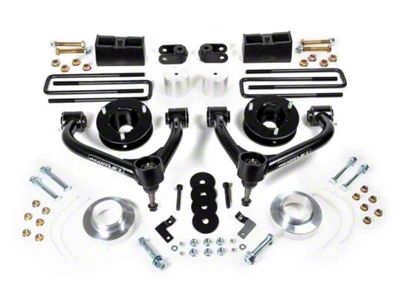
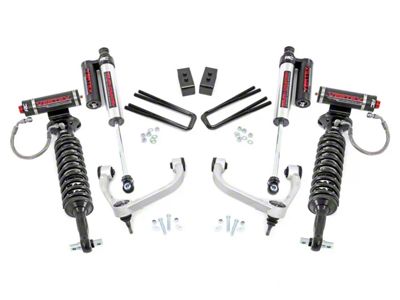
Unfortunately, trucks and SUVs tend not to come from the factory equipped to handle the harsh conditions of spirited off-roading. That's what lift kits are for. First and foremost, they boost your vehicle's ground clearance. That way, you can drive over uneven, rock-strewn paths without pummeling your undercarriage on boulders and tree stumps.
Second, lift kits increase your suspension travel, which is a fancy term for the distance that the moving parts on your suspension can travel away from the fixed parts. In other words, the limit on how far your wheels, springs and shocks can move up and down. The greater your suspension travel, the deeper the holes you can plow across and the taller the boulders you can climb over.
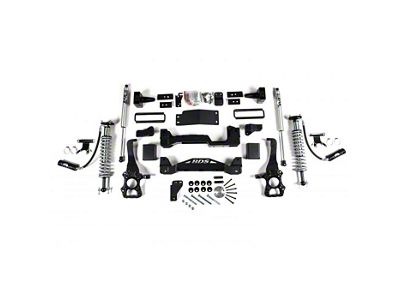
Lastly, a lift kit bolsters your suspension so that it can survive the rigors of unpaved expeditions. Burly shock absorbers, rugged steering linkage and massive springs are just a few of the heavy-duty components in a lift kit that strengthen and fortify your suspension. That way, you can barge over unforgiving topography without worrying about puncturing your oil sump every time you charge over a fallen log or launch off the golden crest of a desert dune.
Awe inspiring style advice
There are a lot of trucks and SUVs put-putting around in big metropolises and sparse rural hamlets, and for good reason. Besides their incredible handiness (you can't squeeze a 62" HDTV or a palm tree sapling in the trunk of any Daewoo), trucks and SUVs offer extra safety, spacious interiors and sharp looks.
However, with everyone running out to pick up Detroit and Japan's latest 4-wheel behemoths, we can sometimes feel like some anonymous member of the herd. Sure, there are ways to stand out from the pack with flashy chrome accents, but nothing compares to the bold statement of a lift kit. Those extra inches transform your vehicle into a commanding presence. And, you can leverage this forceful look to lord over the highways, byways and city streets—you'd be surprised to see just how fast that absentminded slowpoke in the fast lane will scoot over when he sees your lifted rig pull up behind him. Plus, it's nearly impossible to get lost searching for your lifted vehicle in a crowded parking lot–just look up!
The eye-catching wheels and tires primer
Let's be brutally honest—stock wheels tend to be bland, and factory tire sizes can look dwarfish on trucks and SUVs. Unfortunately, you cannot just pick up a set of huge 20" rims with 36" mud bogger tires and expect them to fit onto an unlifted vehicle. There simply isn't enough room in the wheel well without a lift kit.
Now, you don't need to go sky high in order to make room for your dream dubs. In most instances, a simple 2" lift kit is all it takes to make the clearance for big and tall tires. However, there still may be some rubbing along the rim of the wheel well at full shock compression. If this is a problem, the easy solution is to do some minor trimming and add some fender flares.
Techniques for leveling a raked rig
Rakes! They're great for gathering leaves and for spoiling a pickup's sleek profile. Unfortunately, most ½-ton, ¾-ton and full-ton trucks come from the factory with this goofy, forward-slanted design. From the side, they look like some invisible giant is resting all his weight on the front bumper. To the credit of auto manufacturers, there is a legitimate reason for it. These pickups are made for hauling heavy loads. If you pack a ton of concrete into the bed, that weight causes the rear to sag down to the same height as the front. So, they hoist the tail to compensate for the rare event when you have to haul your life-size, bronze memorial statue to ol' number 3, Dale Earnhardt.
However, most of us never use our full payload capacity, so we're stuck with this odd rake-forward look. Even worse, this height difference can make cornering a nightmare because the bed wants to fishtail. Correcting this imbalance is simple: lift the front-end with a custom leveling kit. The 2"-3" of front-end boost in a leveling kit is usually enough to right the scales and accomodate larger wheels and tires.
How does a lift kit work anyhow?
A wise man once sang that there are different strokes for different folks, and the same can be said for lift kits. Ford, GM and Nissan do not share chassis blueprints with each other, so they all design suspensions that are unique from the rest. As you would expect, there are diverse and sundry ways to jack up these numerous suspensions. Let's take a closer look into the most common lift styles for the rear and front.
Rear lift kits
Boosting the backside of trucks and SUVs is fairly straightforward because most of these rigs have dependent rear suspensions. Here are the most frequently used techniques:
Blocks:
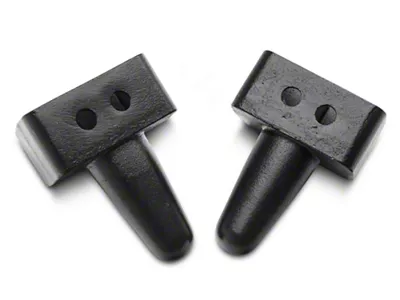
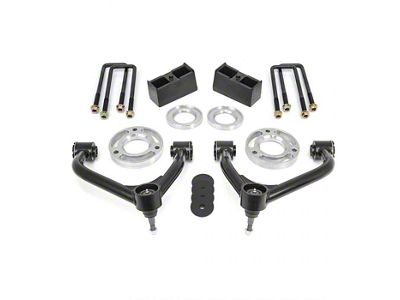
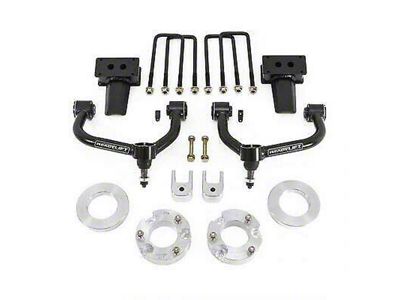
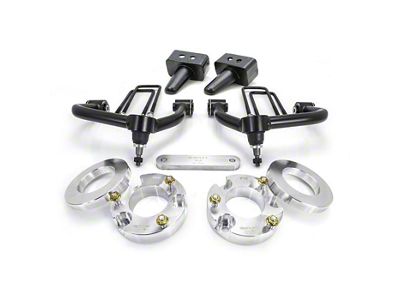
A vertically challenged motorist might tie boxes to his shoes to reach the pedals. Likewise, an undersized vehicle can easily add a couple of inches with a set of blocks. These spacers fit in between the rear coil spring and axle for a fast height hike that does not affect stock ride quality.
Add-A-Leaf:
As their name implies, add-a-leaf lifts raise your vehicle up by stacking extra leafs into your leaf spring packs. Just like the blocks, add-a-leaf lifts are straightforward to install and should not cause a noticeable change in ride or handling.
Full Spring Replacements:
Blocks and add-a-leaf springs are usually used for mild lifts. When you want to reach nosebleed heights, then you'll need a whole new set of springs. Of course, the great thing about full spring replacements is that they correct handling problems caused by worn out stock parts.
Front lift kits
Front-end suspensions tend to be more complicated than the rear because of all the extra steering linkage. Some of the lifting methods remain the same, but there are some newfangled systems as well. Let's go in for a closer look:
Spacers:
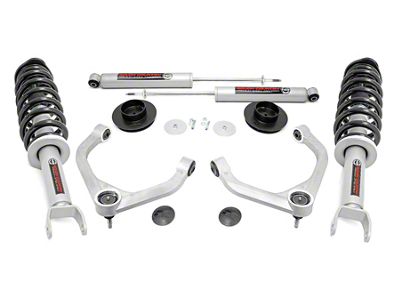
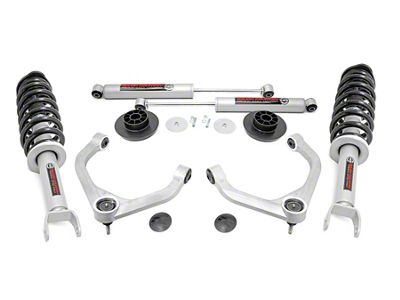
Front coil springs and struts are becoming increasingly popular on trucks and SUVs, and they can be lifted with spacers the same as rear springs are raised with blocks. The spacers sit on top or below your front springs to add a couple inches without dramatically altering your stock ride characteristics.
Add-A-Leaf:
Many heavy-duty rigs have the same type of springs up front as they have in back, and they can be lifted the same way. Stack a few extra leaves onto your leaf spring pack with add-a-leafs, and you'll be riding high in no time.
Steering Knuckles:
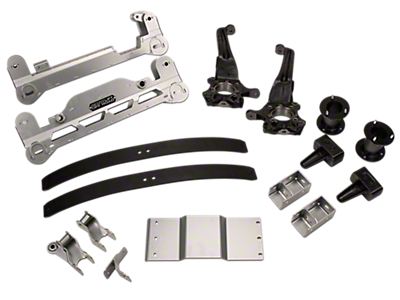
Almost as important as brakes, your steering knuckles are the pivot point that turns yours wheels and lets you steer. Lift kits use taller steering knuckles to send your rig soaring upwards. This type of lift is usually used on vehicles with torsion bar springs.
Spindles:
Just like steering knuckles, spindles play a vital role in the height of your vehicle. Swapping out your old gear with new spindles works the same as installing off-road steering knuckles. They are taller than stock, which pushes your vehicle up higher.
Control Arms:
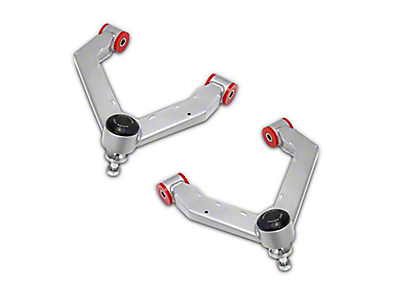
Otherwise known as a wishbones or A-arms, the control arms are the all important connector between the wheel hub and the frame. Unlike steering knuckles and spindles, aftermarket lift control arms are not taller—they're shorter! This creates the same type of gap between the frame and wheels as before, but in a different location. Often, altering the control arm requires a new set of coil springs to compensate for the new elevation, but that's what you expect from a lift: newer, tougher parts.
A few words of advice about choosing a lift kit
Now that you know just about all there is to know about the benefits of lift kits and how they work, all that's left to do is pick the right one. For a greenhorn suspension tinkerer, this may seem easier said than done. But, it really is not as difficult as it sounds. Just ask yourself these vital questions:
- Which lift height is right for me?
- Can I install my own lift kit?
- Do I need anything else besides the lift kit?
- Are lift kits legal?
Which lift height is right for me?
There's a big difference between a 2" bump and a full-blown 8" hike. Because lift kits involve such an extensive installation, you want to get it right the first time. Not too tall that you scrape your roof against your garage door; not too short that you maul your chassis the first minute you pull off the pavement. Here are a few pointers to consider before selecting a lift kit:
- For dedicated off-roaders, bigger is generally better. If you plan on wandering through uncharted passages, you need to be prepared for whatever lies ahead (and behind) of you. Depending on the limitations of your stock suspension, 6"–8" is a good lift kit size. It will give you good ground clearance while allowing plenty of room for oversized tires. Of course, if you want to tackle a Rubicon-grade trail, a 10" lift may be right up your alley.
- For the occasional off-roader who does not want to lose the factory-feel, a more subdued lift kit would be better. 2"–4" is a good height boost for retaining comfortable handling while still giving you the clearance to head out onto unexplored routes.
- For a more aggressive rig that may or may not leave the pavement, get a lift kit size that matches how tough you want to look. A slight lift of 2"–4" will certainly give your vehicle a powerful profile, but a 6"–8" lift will make you king of the road. Or, you can even go monster-size with a gigantic 10" boost for complete dominance.
Can I install my own lift kit?
Mounting a lift kit is a lot more involved than bolting on a new cat-back exhaust system or a cold air intake kit. You'll need more than just some screwdrivers and ratchets to get this job done. Some lift kits require you to get medieval and break out the pliers, blowtorch, power drill and Sawzall.
AutoAnything recommends that you have your lift kit installed at a professional shop. Usually, the best place is your local off-road specialty garage because they should have plenty of experience doing the work. However, if you have the tools, know-how and time, then you can do the job yourself. A well seasoned wrench wrangler can finish a full 4-wheel lift in a day or 3.
Do I need anything else besides the lift kit?
Lifting your vehicle with a lift kit can have a dramatic impact on its driving dynamics. Beyond the ride quality and handling, the shift in height can have more practical effects as well, such as just getting in and out of your rig. Here is a short list of accessories to compliment your lift:
Steering Stabilizers:
Big lifts and big tires lead to big-time wheel shimmy and wandering problems. Moreover, rough roads often cause another obnoxious issue: wheel kick. Steering stabilizers solve all three problems. These horizontal shocks smooth out your handling and even add an imposing look to your front-end.
Performance Programmers:
Many people think that performance programmers are only used to unleash your engine's hidden horsepower and torque. While this is their primary job, performance programmers also have another important function: speedometer recalibration. Installing bigger tires or a different rear-end gear set throws your speedometer out of whack, which can lead to a ticket and a day in traffic court. A performance programmer recalibrates your engine's speed sensor to give you an accurate readout of your velocity. Check out our Performance Programmer Research Guide for more details.
Multi-Shock Kits:
Rugged outdoor treks put a lot of stress on your suspension. If you plan on doing some serious off-roading, you need more than just 1 shock in each corner of your vehicle. With a multi-shock kit, you can mount extra shocks up front for greater dampening, less body roll, more stability and an aggressive look.
Nerf Bars & Side Steps:
Stepping up into a lifted rig can be quite a chore, especially for young and old passengers. Like a built-in ladder, nerf bars and side steps help hoist you up and down from your cabin. Learn more by leafing through our Nerf Bar & Side Step Research Guide.
Skid Plates:
Gaining ground clearance is one of the biggest benefits of a lift kit. But, even the tallest trucks and SUVs are vulnerable to damage down below. Like body armor for your underbelly, skid plates protect your powertrain and suspension components from scrapes, dents and gouges.
Big Brake Kits:
Stock rotors and pads are designed to work with factory-installed wheels. Upsizing your rims and tires adds weight, which in turn increases the time and distance it takes to stop. Larger rotors boost your braking leverage for faster, shorter, safer stops. Plus, they look amazing riding behind open-spoke rims.
Lifts and the law: tips on how to cut through the fog of bureaucratic gobbledygook
Like the Declaration of Independence and the US Constitution, the inspiration behind lift kit is greater liberty and independence. However, freedom ain't free, and lift kits are not immune to regulation. When it comes to modifying your vehicle's suspension, there are a few things that your local DMV might get uppity over. In particular, there are limits on bumper height, body lift, the height from the frame to the ground, headlight height and the use of rear blocks or shackles.
Thanks to the Tenth Amendment, though, each State has the power and prerogative to draft their own lift kit statutes. And, the rules fluctuate between the incredibly lax (Wyoming, go figure!) and the strict (Pennsylvania, we're looking at you). Because of these wide variations, the best thing to do before investing in a lift kit is to check your local laws. DMV and DOT websites are an excellent source for accurate, up-to-date information about hoisting your vehicle heavenward.
The guide to lowering kits
Sure, lifted rigs may dominate dirt paths and rocky roads, but a lowered vehicle gets the attention and admiration on big city streets and beltway highways. Besides all the looks you'll get, a lowering kit can change your relationship with the road and with driving in general. The closer you are with the ground, the more in-tune you become with its texture, condition and capabilities. When you take a sharp corner in your lowered vehicle, it's hard not to feel like Michael Schumacher pulling ahead to yet another victory in his Formula One Ferrari.
Lowering kits are the ideal suspension modification for:
- Sporty handling
- Sleek looks
The basics of sporty handling
Ever wonder why sports cars ride so low to the ground? No, it's not so they can zigzag beneath a big rig's trailer or fly under a cop's speed trap radar. The real reason for the short stature is to lower the center of gravity. With a dropped frame, your chassis runs into less gravitational resistance as you hit the curves. What does all this physics mumbo-jumbo translate into? Simply put, you'll be able to hug the apex of corners like an Andretti racing for the checkered flag.
Another way that lowering kits improve your handling is with stiffer shocks and springs. Spongy dampeners and pliant coils may deliver a smoother ride, but they leave a lot to be desired in terms of performance. Stiffer suspension components boost steering response, reduce nose-dive during hard stops and rear-end squat durning rubber-burning accelerations. The only draw back to firmer dampeners is a harsher ride. Of course, progressive-rate coils and road-sensitive shocks lessen this problem by providing varying degrees of stiffness based on compression.
Some sage advice about sleek looks
From classic rat rods to contemporary cruisers, lowered rides attract a lot of attention. Slammed vehicles, with their streamlined profile and aggressive stance, are true works of automotive art, and they turn more heads than a Lamborghini in the parking lot of a county fair. Best of all, you can choose the size of your lowering kit to transform your vehicle into almost any type of dream machine. Take it down a hair for that sharp NASCAR posture, or go way low for a one-of-a-kind custom look.
Lowering kits are also ideal for showcasing your custom wheels. Big 20" chrome wheels and low-profile tires are wildly popular, but huge gaps in the wheel wells may have a diminishing effect. Dropping your vehicle reduces this space, amplifying the clean, mean style of your sharp rims.
Tips on the different types of lowering kits
With all the variants in suspensions, it's no wonder that there are so many different ways to cut them down to size. Here is a brief explanation of the most common lowering techniques out there today:
Coil Springs:
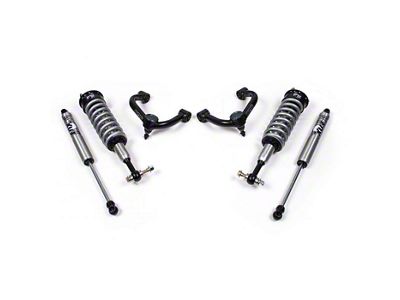
One of the most common, and least invasive, ways to shed a few inches off your height is with shorter coil springs. Generally, these springs are tighter and stiffer than stock ones. Not only does this tautness let the springs respond more rapidly to road conditions, it also limits suspension travel to prevent bottoming out.
Leaf Springs:
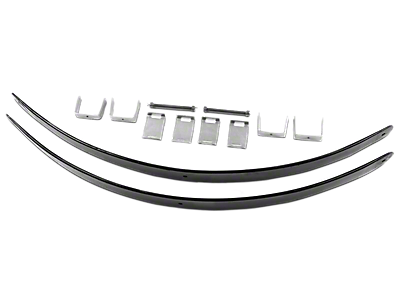
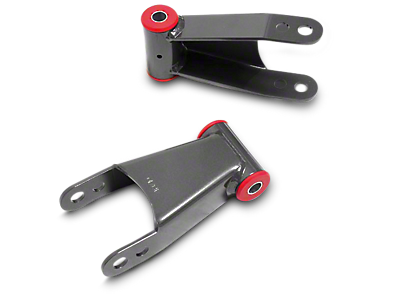
Trucks and SUVs often have leaf springs in the rear, and there are a couple of ways to lower this type of suspension. One technique is to modify the shackles and hangers to reduce the gap between the leaf spring and the frame. For bigger drops, a whole new leaf spring pack may be needed.
Spindles:
spindles connect the steering linkage to the wheel hubs. Mounting a shorter spindle brings your wheels closer to your frame—in other words, lowering your ride. The upside of this type of lowering method is that your suspension travel remains the same.
Control Arms:
Like spindle swaps, new control arms take your vehicle down a few inches without diminishing your suspension travel. You can even couple new spindles with control arms for even deeper drops in your ride height.
Flip Kits:
Another option is a flip kit, one of the more complex lowering techniques around. This involves rearranging the relationship between the axle and the leaf springs. Normally, the leaf springs sit on top of the axle, but the flip kit reverses this setup. Moving the axle above the leaf springs not only shaves off a couple of inches, but it allows for even deeper drops. Flips do require a C-notch or C-section on your frame for axle clearance.
Which Lowering Kit is right for my ride?
When it comes to choosing the right lowering kit for your vehicle, there are really only 2 questions you need to ask yourself:
- how low do you want to go?
- What's your budget?
How low should I go?
There's a big difference between lowering your vehicle a tad and shaving a full 5" off. You'll want to take this information into consideration:
- For enhanced handling and more agile cornering, you do not need to go down very far. An inch or 2 is all you need to bring down your center of gravity. You will want to get stiffer springs and shock absorbers for the ultimate steering performance, though.
- When you want to erase the empty space around your slick wheels, then a mild to moderate drop is right for you. You might be able to use lowering springs alone, or you might need a complete lowering kit. Measure the distance between the peak of your wheel well's lip and the top of your tire. Use this measurement to determine the maximum amount of lowering space.
- If you want to go all the way down, then a complete lowering kit is the only solution. More than just springs and shocks, a full-blown lowering kit comes with all the extra odds and ends you need for a complete suspension makeover.
What's my budget?
While most lift kits will take a serious bite out of your savings account, there are more shades of gray along the lowering kit price spectrum. Let's investigate:
- For the most economical lowering solution, just go with lowering springs. These chopped replacements take the place of your stock coils for a short drop that's big on performance. Plus, you can reuse the shocks you already have, as long as they are not worn out.
- The mid-range lowering kits will include both the shorter coils and a set of performance shocks. Together, they deliver a double dose of spry handling and solid dampening.
- For the ultimate suspension slam with track-worthy handling, then the only choice is a complete lowering kit. It's chock full of premium springs, choice shocks and all the extra components you need for a total transformation.
The Performance Shocks Guide
As shocking as it may sound, shock absorbers are probably one of the most useful inventions of the automotive age. Imagine if you will a world without shock absorbers. The tiniest bump or dip in the streets would send violent, shimmying waves pulsating through your vehicle without end. Any off-pavement trek would have to be followed by an immediate trip to the dentist for emergency replacement of the fillings and crowns that were jarred out of your molars.
Thankfully, this twilight zone scenario exists only in our darkest nightmares, and shock absorbers have been invented and do take the shake, rattle and roll out of our vehicles. These slender cylinders are the unsung heroes of your suspension system, and it's time to pay tribute by learning a little bit about what makes them tick.
Anatomy of a Shock Absorber
The outside of a shock is hardly interesting, but its guts are where the magic happens. Let's pull out a cutting torch, dissect a standard shock absorber and see just how these marvels work:
Mounts:
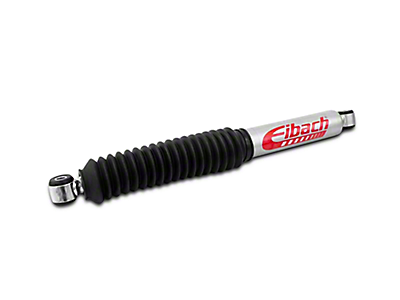
A shock serves no purpose unless it's mounted firmly to your chassis. Depending on the suspension type, the mounts will be either eye style (donut shaped) or stem style (hi-hat shaped). The mounts are lined with a padded cushioning, usually rubber or polyurethane.
Cylinder:
Home sweet home. The cylinder is the tough outer housing for the shock's intricate inner workings. The size of the cylinder is one of the most important factors in the overall performance of the shock. A larger cylinder means a bigger piston and more oil, and when it comes to shock absorption, bigger is better. For corrosion resistance and eye-catching looks, the cylinders are usually painted with enamel or finished with a rust-repelling coating like nickel or chrome.
Boot:
A shock is made for absorbing, and that's just what it will do with a protective boot. This durable cover blocks dirt, grit and road crud from making its way into the shock and gumming up the works. Shocks are tough, but their innards are still susceptible to wear and tear. The boot provides a shield against mud clods, and it enhances the style.
Piston Rod:
One of the main components in a shock, the piston rod is the backbone. The oscillating energy of the springs transfers directly into the piston rod, which then plunges the piston into the oil to dampen the bounce. Often, the piston rod is hidden under the boot, but it's always at work when the vehicle is in motion.
Piston:
As you would expect, the piston is mounted at the end of the piston rod. As the rod throbs up and down from the spring's energy, the piston rams into the oil, creating the hydraulic pressure that smoothes out your ride. The diameter of the piston matches the diameter of the cylinder (or the cylinder's inner chamber where the main oil supply is). This design maximizes the pressure strength because the oil cannot flow around the piston, only through the valve.
Valve:
The valve is a conduit that controls the flow of oil from one area of the shock into another. When the piston pushes down into the shock, the oil moves through the valve. Only a small amount of fluid can pass through the valve at a time, and this creates the hydraulic pressure that dampens the spring's energy. Most modern shocks have road-responsive valves. When the street is calm, the valves open up for a softer ride. But, when things start to get hairy, the valve closes off for extra stiffness.
Oil:
Forget about canola oil—shock are filled with nothing less than industrial grade goo. Of course, the oil has to be rugged because it's the final step in the dampening process. The kinetic energy from the bouncing spring transfers to the piston rod, which sends the piston plunging into the oil. The highly viscous oil resists the piston's motion and absorbs the kinetic energy, which transforms into heat.
Monotube vs. twin-tube vs. foam cell shocks: A beginner's guide
A shock absorber is an incredibly simple and effective part of any suspension, and it has only one shortcoming: high temperatures. All the energy created by the springs has to go somewhere, and it ends up morphing into heat. Unfortunately, when the oil's mercury starts to rise, its viscosity starts to thin out and absorbs less energy. If the oil gets too hot, it can start to bubble like a pot of boiling water, causing a dreaded case of shock fade.
Besides just dampening, a good shock must also be engineered to dissipate heat efficiently for consistent performance. The primary way to keep fade and foam in check is through maintaining high internal pressure. Ever wonder why a radiator doesn't boil over unless you open the cap? It's because your coolant is pressurized, and pressure greatly increases a fluid's boiling point. Shock absorbers work the same way. In general, shock fade is kept at bay through gas charges and tube design. Let's investigate the 3 most common designs:
Twin-Tube Shocks:
The twin-tube shock can trace its lineage back to the mid 20th century, and its ingenious design still stands the test of time. As its name implies, twin-tube shocks have 2 chambers: an inner and an outer tube. The inner tube is where most of the work takes place. Here, the piston plows up and down through the main supply of oil. The outer chamber holds an extra supply of oil and a low pressure gas charge at around 100–150 psi. The gas, usually nitrogen, provides the backstop against the flow of oil for mega dampening. However, as the oil heats up, it can mix with the gas and cause foam and fade.
Twin-tube shocks deliver comfortable, stable all-around dampening for cars, trucks and SUVs. In fact, twin-tubes are probably the most commonly used shocks in the automotive market today. Ideal for street driving, they feel smooth yet still reduce body roll and sway during cornering and dipping during hard stops and spirited acceleration. However, rugged off-roading can cause the twin-tubes to overheat, which leads to foam and fade in extreme conditions.
Foam Cell Shocks:
Foam cell shocks are nearly identical in design to twin-tubes. The key difference is that the gas is trapped inside of tiny little capsules rather than free-floating. By separating the gas charge from the oil, the risk of foaming is nearly eliminated while still providing the comfortable ride quality of a twin-tube shock. However, foam cell shocks are vulnerable to overheating. If the oil in these shocks gets too hot, the foam cells can erupt. After that, no matter how long they cool down, they'll never regain the same level of performance.
Monotube Shocks:
One may be the loneliest number, but monotube shocks have no problem leading a solitary life. Rather than using two chambers, these burly shock absorbers do it all in a single tube. What's more, they have twice the piston power as a twin-tube shock. The first piston is located right where you would expect it–at the end of the piston rod. This first piston pushes against a section of oil, which is forced downward into the second piston. This floating piston is sandwiched between a section of viscose oil and a pocket of highly charged gas (between 200–360 psi). By separating the oil from the gas, monotube shocks greatly reduce the risk of oil foaming and fade.
The dual piston design of monotube shocks provides stiffer dampening, which is preferred for sportier handling and grueling off-road conditions. Monotube shocks are also air cooled, so they do not retain heat the way twin-tubes do. Plus, they can be mounted upside down for extra weight support. However, monotube shocks are difficult to mount in place of stock twin-tube shocks on cars and stock-height trucks and SUVs because of the added length and range. Also, monotube shocks are slightly more vulnerable to dent damage because there is no outer buffer.
Tips for choosing the right shocks for your vehicle
It's hard enough to go into a grocery store and find the perfect tomato—choosing the right shock absorbers for your vehicle shouldn't leave you pulling your hair out with indecision. The selection is large, so use these questions to narrow your search and find the perfect set of dampeners:
- Where are you going to use the shocks?
- How many shocks do you need?
- What finish do you want?
Where are you going to use the shocks?
Different terrains call for different degrees of dampening. What works on a fresh stretch of pavement is murder on the washboard "driveway" leading to your distant relative's rustic hovel. Here are some tips for selecting the best set of shocks for your driving habits:
- For standard street cruising, go with a set of multi-stage valving shocks. They automatically respond to varying road conditions, staying cushiony on smooth routes and getting stiffer when you roll into pothole country. Edelbrock Performer IAS Shocks represent this shock style.
- For the occasional off-roader, a beefier set of shock absorbers is key. A thicker cylinder, a larger piston and dust boots are highly recommended. Shocks similar to Skyjacker Nitro 8000 Shocks are up to the task.
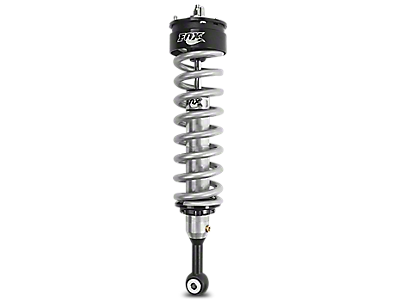
- For wild and wooly off-road adventurers, only the toughest, stiffest, most durable shock absorbers will do. Monster-size monotube shocks deliver superior dampening for heavyweight rigs, and mammoth coilover shocks offer unmatched performance both on the Rubicon or on Route 66. You probably want to get a set of shocks with an oil reservoir for enhanced heat control and less fade, similar to Fabtech Dirt Logic Shocks.
How many shocks do you need?
Having the right type of shocks is important, but not as important as having the right number of them. Here are some suggestions:
- For drivers who always keep all 4 tires on the pavement, the rule of thumb is 2 shocks per axle. 1 at each wheel should be enough to handle even the most dilapidated stretches of road.
- Vehicles with heavyweight bumpers, snow plows or winches should consider upgrading to a multi-shock kit. Adding a few extra dampeners to your front-end counters the instability of the excess pounds.
- For lifted vehicles with larger tires, multi-shock kits are also strongly recommended. They reduce body roll while cornering and provide much needed stability on rocky trails. Plus, they add an imposing look to your front wheel wells.
What finish should you get?
Like most aftermarket accessories, shock absorbers come in a wide range of finishes. Besides enhancing your vehicle's image, these coatings and treatments block out corrosion. Here are some suggestions:
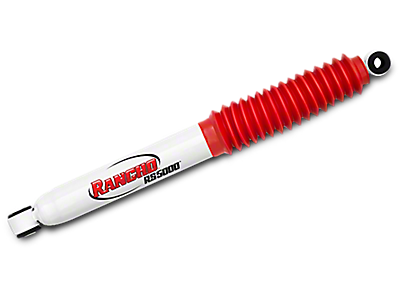
- For a more traditional look, get a set of shock absorbers with a white enamel finish. This classic coating has been around for generations, and it still remains quite popular. Plus, the enamel puts up an effective barrier against rust and oxidation, as long as it does not get scratched. Rancho RS5000 Shocks have the classic look.
- When you want a more eye-catching appearance, get metal-plated shock absorbers. From glimmering nickel to sparkling chrome, these metallic shock absorbers have a tough look and the rust-resilience to back it up. Edelbrock Xtreme IAS Shocks are a great pick for this finish.