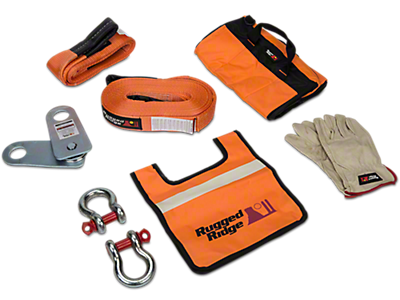
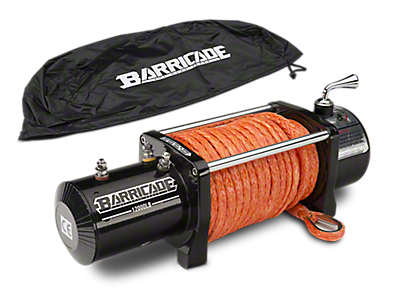
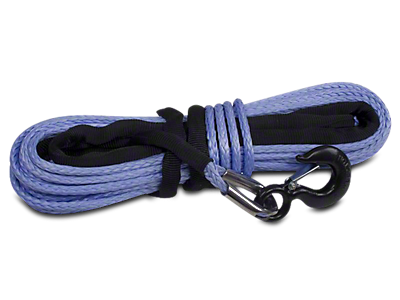
There are two kinds of drivers in this world. One kind never takes any risks and spends their entire life with pavement under their tires. Then, there is that special breed that seeks out every opportunity to roll around in the dirt. These are the people who give serious consideration to cutting through fields and pastures whenever traffic starts stacking up. They have mud in their treads, mud sprayed up on their rocker panels, mud under their finger nails, and they love it. Who are these intrepid adventurers? Off-roaders.
The Fundamental Advantages of Winch Ownership
Even the most experienced 4x4ers can find themselves spinning their tires in a soggy bog or an icy ravine. Think you can't just call up AAA and request a tow truck to dislodge your rig from a crevasse when you're four clicks out on the Rubicon Trail? Forget about it. When you head out into the badlands, you have to be prepared. That's when you need a mighty winch. But their usefulness doesn't stop there. Winches are ideal for:
Extracting yourself from sticky situations
Rescuing your buddies
Making your vehicle more versatile
Assisting in your workday
A quick reference to extraction
The farther away from civilization you go, the more treacherous the terrain becomes. Mushy wetlands, frozen tundra, and craggy gorges can bring 4-wheel explorations to a grinding halt. In the worse case scenario, you could even have to abandon ship if you find yourself axle-deep in quicksand or lodged in a ditch. The backcountry is full of the sun-bleached skeletons of deserted rigs, and their rotting remains remind us all of the old Boy Scout motto: "Be Prepared."
Conquering these unforgiving environments takes special equipment. With a winch on board, you can pull yourself to safety and continue on your way.
The basics of rescue missions
Hero. Better get used to that word. You'll be hearing it a lot after you equip your vehicle with a hard-pulling winch. Anytime someone in your off-road convoy gets stuck, you'll be ready to reel them back onto the road. This can come in handy inside city limits, too. When the first batch of winter snow starts falling, cars start slipping and sliding off the road. You and your winch can liberate your friends and family from almost any pickle.
A brief guide to enhancing off-road versatility
Towering lift kits, all-terrain tires, and an aggressive powertrain can only take you so far. The biggest wheels in the world are not going to help if you run across a monster boulder or a steep, slippery grade. With a beefy winch riding along, you'll have the confidence to venture deeper and deeper into the great unknown. Obstacles stop being barriers and start becoming challenges.
Learning about work assistance
A winch is a powder keg of raw power waiting to be harnessed and put to good use. Its helpfulness extends well beyond hauling autos out of jams. From uprooting tree stumps to dragging heavy equipment from point A to point B, a winch can make easy work of the most daunting tasks. Is a fallen oak branch blocking your driveway? You and your winch can drag it aside without breaking a sweat. The possibilities are nearly limitless.
Anatomy of a Winch:
Without a strong working knowledge of our innards, physicians and surgeons could not mend our wounds, cure our ailments, or augment our appearances. Similarly, all responsible winch owners should have at least a basic understanding of the ins and outs of their mechanized hauler in order to maximize their utility, helpfulness and value. Besides, the more you know about winches, the easier it is to choose the best one for your outdoor escapades.
Motor:
The heart and soul of every winch. The motor drives the gear train, which in turn turns the drum to haul in the line. Electrical winch motors connect to your vehicle's 12- or 24-volt battery while hydraulic winch motors tap into your power steering pump.
Drum:
The shoulder of the winch. Spun by the gear train, the drum controls the casting out and reeling in of the cable.
Cable:
The arm of the winch. The cable reaches out, digs its claws into the anchor point, and holds tight while you pull free. Most cable is braided steel, and the diameter and length of the cable is based on the strength of the winch. Some off-roaders are switching to synthetic fiber rope, which is lighter and safer if snapped.
Fairlead:
The mouth of the winch. The fairlead has two jobs. First, it provides a safe passageway for the cable too spool through. Second, it guides the cable back onto the drum when winching at an angle.
There are two types of fairleads: a hawse and a roller. Hawse fairleads are oval-shaped openings with smooth edges and no moving parts. These basic fairleads work best with synthetic cables since there are no corners to snag on. Roller fairleads have rectangular openings, and each side has a rolling cylinder that gently guides the cable back onto the drum. Steel ropes work best on these fairleads because they reduce splintering.
Gear Train:
The muscle of the winch. After the motor starts running, it sends energy to the gear train, where it gets amplified into huge hauling power. The two most common types of gear trains are planetary and worm. In a planetary gear train, multiple gears spin together, creating faster pulling speeds and warmer temperatures. In a worm gear train, there are only two heavy-duty gears, which deliver incredible strength without as much heat.
Braking System:
The heels of the winch. When you have a couple tons of weight on your line, you want to be sure that you can keep it under control. Most winches feature automatic brakes that clamp down on the drum once the motor stops, holding your haul steady until you start up the motor again. Heavy-duty rock crawler winches, like the Warn 8274-50 Winch, actually use disc brakes for maximum stopping power.
Clutch:
The sinew of the winch. In a manual vehicle, you have to step on the clutch to change gears. The same is true of your winch. The clutch lets you either disengage the gear train (for freespooling), or engage the gear train (for pulling). If your winch doesn't seem to be working properly, check to make sure that the clutch is engaged—you may just be sitting in neutral.
Control Box:
The brain of the winch. The control box has the basic, but important, job of telling your winch which direction to spin. Most winches have electronic control boxes with mechanical solenoids that switch the line direction between forward and reverse. Mechanical solenoids are vulnerable to failure under extreme heat or biting cold, so Warn developed a M.O.S.F.E.T. control box, which uses no moving parts and works in conditions ranging from -40°F to +180°F.
In general, control boxes are mounted directly on the winch. If space is limited on your vehicle, you can get a winch with a remote control box. That way, you can mount them separately and fit them just about anywhere.
Remote Control:
The spinal cord of the winch. Like your computer's keyboard and mouse, the remote control is how you interact with the winch. Instead of an "A" and a "B", these remote controls use toggle switches or buttons to haul in or reel out the winch's cable. There are two types of remote controls: wired and wireless. Wired remotes are the standard, and most have a 12' lead. Wireless remotes are gaining popularity because their long range allows you to work the winch at safer, more convenient distances.
Electric Winches vs. Hydraulic Winches
Ford vs. Dodge, Hatfield vs. McCoy, Holyfield vs. Tyson—the world is full of famous rivalries. When it comes to winches, there is a head-to-head bout going on between the electronics and hydraulics. Let's take a look at how each type weighs in.
Learning about Electric Winches
As their name implies, electric winches tap into your vehicle's electrical system to generate power. Here are their basic pros and cons:
Pros:
Easy to install: In most cases, you simply bolt the winch to your rig and run a couple of wires up to your car battery. You can get most winches for the old-school 24-volt systems or the more modern 12-volt setups, too. This is also incredibly convenient if you want to take off your winch during the off-roading off season.
Abundant assortment: Variety is the spice of life, and electric winches come in all sorts of sizes, shapes and flavors. From meat-and-potatoes to state-of-the-art, the spectrum of electric winches is quite broad. Somewhere on this scale is a winch with just the right features and plenty of whiz-bang for your needs. And, electric winches are basically universal and can mount onto almost any auto (sedans, wagons and Deloreans excluded, for the most part).
Cons:
Draw a lot of power: Electric winches put a heavy load on your vehicle's battery. As such, you should have your motor running during pulls to prevent a complete battery drain. And, they are designed for intermittent use instead of prolonged pulls.
High operating temperatures: The electric motor creates a lot of heat, which builds up in the drum and can damage the winch. The occasional breather is needed to prevent overheating. Plus, excessive heat is never good for synthetic cables, which can melt and snap if seared on a sizzling drum.
Learning about Hydraulic Winches:
Instead of running off electricity, the motor in a hydraulic winch draws its might from one of the most powerful resources on your vehicle: the power steering pump. This unique setup creates some interesting advantages and disadvantages:
Pros:
Continuous pull time: When you're stuck on the sidelines, you want to get back into the game as soon as possible. You can run a hydraulic winch almost non-stop for extended periods, greatly reducing rescue times. However, your vehicle does have to be running to use a hydraulic winch because it draws its strength from your power steering pump.
Cooler operating temperatures: Another advantage of hydraulic winches is that they don't produce nearly as much heat as electric winches. You won't have to stand around twiddling your thumbs while your winch takes a knee. And, synthetic cables are less likely to melt and break on a hydraulic winch.
Cons:
Involved installation: Re-plumbing your power steering pump takes a while and requires a bit of know-how. Expect to spend a few hours under the hood, and an extra set of hands is also helpful. What's more, it's difficult to remove a hydraulic winch once it's been mounted, so it becomes an almost permanent addition to your vehicle.
Narrow selection: Though not as sparse as a Soviet-era grocery store, the range of hydraulic winches is pretty limited. These bare-bones winches are made for pulling, not for extra features or fancy trimmings. Plus, hydraulic winches are not universal, so they are only made for a select number of vehicles.
The Decision:
There are factions of winch users who swear by electrics, and there are those who would never be caught dead on a dusty trail without their trusty hydraulic. Both kinds of winches are more than capable of freeing your friends or yourself from a tight spot. In general, hydraulic winches are better for longer, sustained pulls. On the other hand, electric winches are just as strong and are incredibly easy to get up and running. It's hard to go wrong with either style, so let your gut be your guide.
An introduction to winch mounts
The one common trait among all winches is that they need a firm winch mount. Sure, it would be easy if we could just strap our winches to our bumpers with some bungee cords, but that would be a sure-fire recipe for destruction. Winches need to be snuggly secured to your vehicle to provide the right amount of support to handle thousands of pounds of weight. Here's a quick overview of the most common types of winch mounts:
Grille Guard Mounts: These popular mounts give you a sturdy platform for your winch, solid front-end protection, and a forceful look. Most off-roaders need a grille guard anyways to shield the vulnerable nose of their rigs from rocks, vegetation and other hazards. Moreover, this type of mount allows for convenient, fast access to your winch whenever you need it.
Grille guard mounts, like the Ramsey Wraparound Grille Guard, are custom-designed to fit onto your vehicle. The installation usually involves drilling, and some trimming may also be required for a steadfast attachment.
Hitch Mounts: Hitch mounts, like the Warn Multi-Mount Winch Frame, are the easiest type to install. The winch simply bolts to a cradle, which then hooks up to your class III towing hitch. A rear-mounted winch is especially handy if you venture too deep down a narrow pass, or if a buddy from behind needs a hand. For maximum versatility, you can even connect a receiver to your front-end and pull from either direction.
Hitch mounts are ideal for sharing a single winch among multiple vehicles because you can take them off and put them on so easily. However, this can create a theft risk. Be sure to get a locking hitch pin to secure your winch. When not in use, it's a good idea to leave your winch locked up in your truck toolbox or back at home in the garage.
Hidden and Semi-hidden Mounts: When you don't want a winch to distract from your vehicle's clean look, then a hidden or semi-hidden mount is right for you. These winch mounts, like this Ramsey Hidden Mount, connect behind and below your stock bumper, which remains intact. This keeps your winch mostly out of sight, sheltered from the elements, and quite secured from thieves. Because it's tucked away, access to the clutch, cable and other controls can be tricky.
Equipping your vehicle with a hidden or semi-hidden winch mount will take some time, but should not pose a challenge to seasoned do-it-your-selfers. There may be some drilling and cutting involved, though.
Replacement Bumper Mounts: Sometimes, total reconstructive surgery is just what the doctor ordered. When you want a rock-solid home for your winch, go with a replacement bumper. Taking the place of your stock gear, these custom-engineered bumpers fuse to your frame, forming the firmest base for your winch. And, they come in multiple styles that vary from the subdued, which blend in with your factory lines, to the heavy-duty, which transform your front-end into an imposing sight (the Warn Heavy-Duty Bumper is a perfect example).
As you would expect, installing a replacement bumper mount will take some time and effort. Drilling and cutting are almost always required. If your vehicle is equipped with airbags, it is especially important to take care not to disturb the deployment sensors during installation.
Which winch is right for me?
Picking a breakfast cereal is easy: you get what tastes good. Deciding on the right winch involves greater consideration. After all, you can't simply shove an unwanted winch to the back of your cupboard the way you can with a box of Count Chocula. Ask yourself these questions:
How much rated line pull do you need?
How fast do want your winch?
Which type of cable do you need?
How much cable do you need?
How much rated line pull is right for my vehicle?
Choosing a winch with a high enough rated line pull is critical. While you can't go wrong with extra energy, not enough backbone will leave you stranded. Thankfully, there is an easy formula to calculate the minimum rated line pull needed for your vehicle:
Gross Vehicle Weight x 1.5 = Minimum Rated Line Pull
For example, a 2006 Jeep Wrangler Rubicon has a gross vehicle weight of 4600lbs, so it would require a winch with at least 6900lbs. of rated line pull, like the Ramsey Patriot 8000 Winch. Compare that to an 8600lbs 2006 Hummer H2, which needs a winch with at least 12900lbs. of pulling power (the burly Warn M15000 Winch would do the job). Size does matter.
Everyone has heard of curb weight, but gross vehicle weight is not a term that gets batted around too frequently. Here's a quick explanation. Gross vehicle weight is basically the maximum your vehicle can weigh when fully loaded with passengers, gear and fuel. Most owner's manuals have the gross vehicle weight listed along with the other specs, like engine size and oil grade. If it's missing, you can estimate your gross weight by taking your curb weight and adding the approximate mass of you, your passengers and all the stuff you plan on packing along.
A few words on pulling power
When a doctor dolls out drugs, she takes into consideration your height and weight to determine the right dosage. TV's rotund villain Boss Hog would require more Prozac to calm his nerves than the svelte Daisy Duke. The same is true for rigs and winches. The bigger, bulkier and heavier the vehicle, the stronger the winch has to be.
A winch's power is measured by its rated line pull. This can range anywhere from 1500lbs. to 16500lbs of pulling power. Now, a winch's rated line pull is greatest when there are fewer layers of cable on the drum. In other words, the farther out the cable is stretched, the mightier the winch is. As cable is spooled back onto the drum, the winch's pulling power diminishes. Keep this in mind when you are choosing an anchor point.
How fast do you want your winch?
Automobiles have an elaborate system of interwoven parts and components to generate speed. An engine, transmission, fuel pump, fuel injectors, differential—the list goes on and on. Winches, on the other hand, have just one: the gear train. Even better, there are only two types of gear trains to choose from, so the choice is pretty easy.
For the fastest line speeds, get a winch with a planetary gear train. Some are faster than others, but nearly all of our winches have detailed information showing line speeds under different loads.
For a steady pace with less heat, look into a winch with a worm gear train. By using fewer moving parts, worm gears can work extremely hard without creating a lot of excess heat.
Which type of cable do you need?
The cable is probably the most important part on your winch. Even if your motor, gear train and drum are in prime working condition, a bum cable means no pulling.
There are two types of cables: steel and synthetic. Steel is the standard for most electric and hydraulic winches, seen here on the Mile Marker PE6000 Winch. It offers incredibly strength, rugged durability, and greater longevity. On the down side, steel cables are incredibly dangerous when they snap, can develop sharp splinters, and add extra weight to your front-end. Synthetic cables, as seen on winches like the Ramsey Triple-X 6000 Winch, are rapidly gaining popularity because of their lighter weight and soft feel. Best of all, when synthetic cables break, they do not snap violently around like a steel cable. However, they are more expensive, more prone to breaking, vulnerable to heat damage, and require more finesse during the pull.
For first-time winch owners, it's best to start with a steel cable. They are more tolerant of abuse and cheaper to replace.
Experienced reelers should use what they feel most comfortable with. If steel has always treated you kindly, stick with what works. For long-time synthetic users, why switch now?
If you want to cut down of your vehicle's weight, go with the synthetic. This is especially true for rock crawlers and mud boggers, whose abilities can be reduced by excess pounds.
How much cable do you need?
All the pulling power in the world is worthless if you can't reach an anchor point. Having enough cable is critical, but too much can dramatically cut your winch's strength. Calculating the right cable length is something of a balancing act, so here are a few suggestions:
A good all-around length of cable to have is between 90' and 100'. This should give you plenty of range without a lot of excess.
On dense forest treks and rocky passages, a shorter cable is best. Around 60' and 80' is plenty in areas with a lot of solid anchors.
For adventures into barren badlands and desert wastelands, be sure to pack along plenty of spare cable. Between 110' and 150' of spool is a good amount in these wide-open spaces.
A few final tips on winch safety
Table saws, plasma welders, crucibles—every tool requires a certain amount of precaution. Winches are no exception. The amount of weight and tension involved in a normal pull can be tremendous. If the cable were to snap...well, you can just imagine the damage that a steel whip can inflict. Rubber bands hurt enough, and they're not even made of metal.
It's important to follow some basic safety measures while you're using your winch:
Take plenty of time to plan your pull. Survey your surroundings and determine the best course of action based on the terrain and anchor points.
Always wear gloves when working with the winch's cable. Over time, your line can develop steel splinters, which can tear uncovered hands to ribbons.
Designate an area that's far enough away from the pull for others to watch from. No one should ever be standing in front of or behind your vehicle, and never near the cable.
Choose an anchor point that's both strong and secure. Trees, rocks and other vehicles are all prime anchors. If possible, find a spot that's straight ahead of the direction you want to pull.
Operate the winch from inside your cockpit. For maximum protection, you can lift the hood and use it to shield your windshield.
Lay something over the midpoint of the cable to absorb energy in case it snaps. A heavy blanket, coat, tree branch, chain or something else that's pliable and weighty will work just fine.
Go slowly. It's better to ease your way back onto the road than rush and risk injury.
A dose of common sense and these pointers should keep you, your winch and your vehicle safe, sound and on the go.
Shop Popular Winches Products
Ask the Expert This page is maintained by Nathan at AutoAnything. If you have any Winches questions, leave a comment below.